System Settings
Utilizing System Settings for global management of configuration parameters.
Managing Central Configuration Parameters
System settings serve as a centralized method for globally managing cluster configuration parameters throughout the entire cluster. We have already established certain configuration parameters and provided documentation regarding their purpose and significance.
You can incorporate system settings within blueprints, either through static selections or dynamic values. Typical use cases for system settings include managing email tokens, establishing global reply-to addresses, or configuring global parameters for various system components.
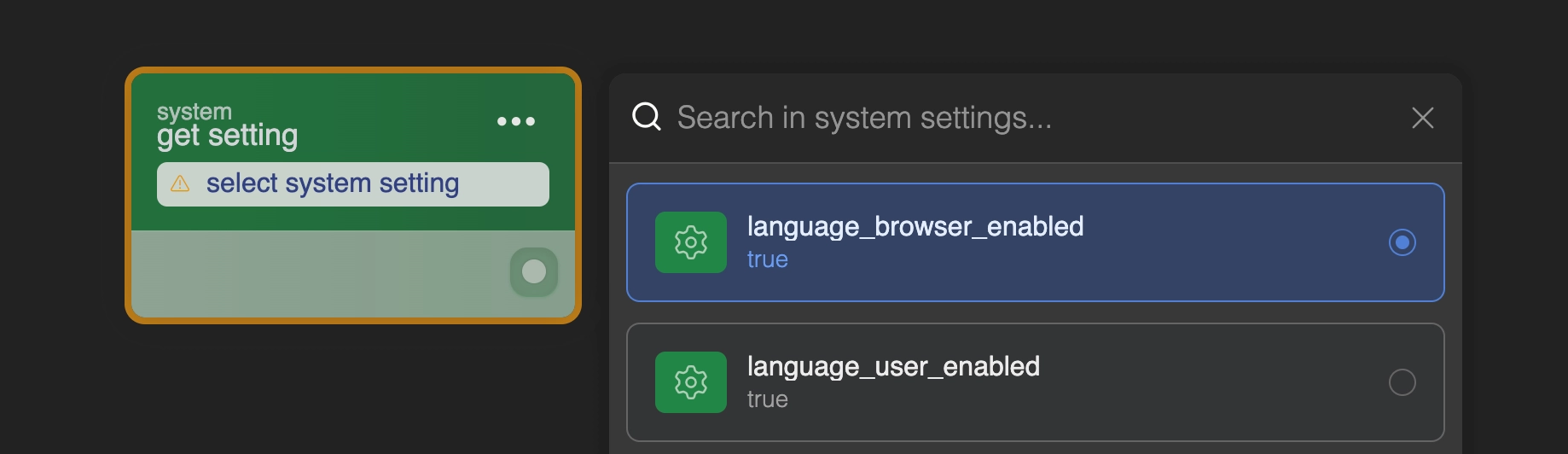
Securing Values
We also offer the option to secure values. When you create a secure value, it remains concealed and is not directly visible when accessing system keys or reviewing them in overviews or blueprints. Any request to view a secured system setting is logged for audit trail purposes. This way, you can track who accessed which tokens, providing you with the ability to manage token access and revocation effectively.
Default Configuration Keys
By default, the following keys are predefined and can be modified to alter the behavior of the cluster. Each key's purpose, example value, and when to change it is covered in detail in the System Settings Reference, including secure token handling and a complete email configuration example.
| Key | Description |
|---|---|
timezone |
Specifies the default timezone for the execution of date type blocks. |
thousand_separator |
Determines the default separator used for formatting thousands in numbers. |
decimal_separator |
Specifies the default separator used for formatting decimals in numbers. |
language_user_enabled |
If set to true, the user's data will be used to determine their language preference. |
language_query_enabled |
If set to true, the data from the query will be used to determine the user's language. |
language_browser_enabled |
If set to true, the data from the supported language in the browser will be used to determine the user's language. |
language_default |
Specifies the default language to use when the user's language cannot be determined or does not match a supported language. |
input_datetime_format |
Defines the date format to be used in datetime inputs. |
input_date_format |
Specifies the date format to be used in date inputs. |
date_default_format |
Specifies the default date format used when rendering dates in the user interface. |
default_divide_by |
Specifies the default number by which to divide pricing inputs, for example, 100 to store pricing fields in cents. |
email_default_from |
Determines the default value to be used as the from address when sending emails. |
messagebird_originator |
Specifies the default originator name used in MessageBird SMS for two-factor authentication (2FA). |
postmark_token |
Determines the default server token to be used when sending password reset emails. |
Frequently asked
What are RUAL system settings used for?
They are the centralized method for managing cluster-wide configuration parameters, from timezone and date formats to email tokens and global reply-to addresses. Blueprints read them through the get system setting block, either as static selections or as dynamic values.
How do I store a secret like an API token in RUAL?
Create the system setting as a secure value. It stays concealed when accessing system keys, in overviews and in blueprints, and any request to view a secured setting is logged for audit purposes, so you can track who accessed which token.
Which system settings does RUAL predefine?
Keys for timezone, thousand and decimal separators, the four language settings, date and datetime input formats, the default date rendering format, default_divide_by for pricing inputs, email_default_from, messagebird_originator and postmark_token.